

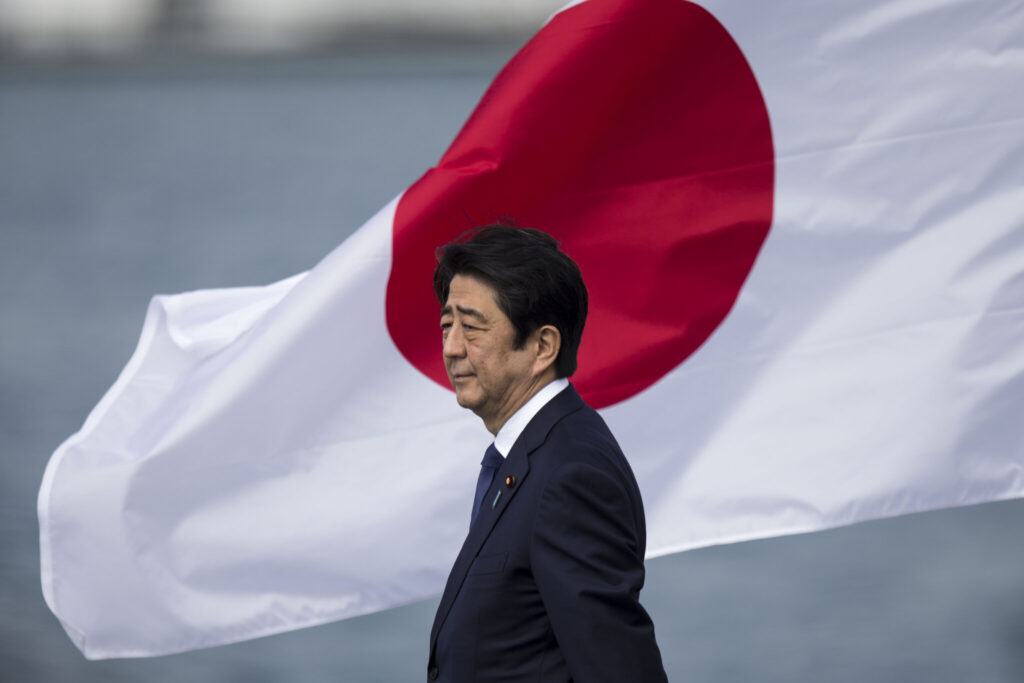
After decades of constitutionally enshrined pacifism and reliance on American military protection, Japan is undergoing its most significant defense transformation since the end of World War II. Confronted by an assertive China, nuclear-armed North Korea, and Russian territorial disputes, Tokyo is shedding its post-war restraints to become a formidable military power capable of independent defense.
In a move that would have been unthinkable a decade ago, Japan has scrapped its long-standing 1% GDP ceiling on defense spending, a self-imposed limit that had defined its security posture for generations. The country now aims to reach the NATO-standard 2% benchmark by fiscal year 2027, with current spending already hovering around 1.6% of GDP.
Japan’s 2024 Defence White Paper projects funding for “fundamental reinforcement of defence capabilities” will reach approximately 11 trillion yen, roughly $69.6 billion, by 2027. Over the five-year Defence Build-Up Programme spanning 2023 to 2027, Tokyo plans to spend a staggering 43 trillion yen on military modernization. Industry analysts at GlobalData forecast total defense expenditure could hit $85.9 billion by 2028, up from $70.3 billion in 2024.
“This isn’t tinkering at the margins,” said one regional security analyst. “This is a wholesale transformation of Japan’s military capabilities.”
Initiated in 2022, Japan’s Defence Build-up Programme is nothing less than a comprehensive overhaul of the nation’s military capabilities. The programme’s stated goal is stark: by 2027, Japan must be able to take “primary responsibility for dealing with invasions against its nation” and possess the ability to “disrupt and defeat such threats while gaining support of its ally and others.”
The language marks a fundamental recalibration of Japan’s relationship with the United States. While American forces remain crucial, with more than 50,000 US military personnel stationed across Japan, including the US Navy’s 7th Fleet at Yokosuka, Tokyo is increasingly positioning itself as an equal military partner rather than a dependent client state.
The 2024 White Paper struck a notably more independent tone, emphasizing the need to balance US deterrence with mitigating “the impacts of the stationing of the USFJ (US Forces Japan) on the living environment of local residents,” particularly in Okinawa, where American bases have long been a source of local resentment.
Perhaps the most dramatic departure from Japan’s purely defensive posture is its embrace of stand-off strike capabilities: weapons designed to hit targets from beyond the range of enemy defenses. For a nation that has long forsworn offensive military power, this represents a psychological as well as strategic shift. The piece-de-resistance: American-made Tomahawk cruise missiles. Last year, the US State Department approved a $2.35 billion sale providing Japan with up to 200 Tomahawk Block IV and Block V missiles, along with 14 tactical weapon control systems.
Originally scheduled for deployment in the 2030s, the programme has been dramatically accelerated, with missiles now set to arrive in fiscal year 2025—a full year ahead of the revised schedule.
Tokyo isn’t relying solely on American hardware. It’s also upgrading its domestically produced Type-12 anti-ship missile into a ground-launched variant with extended range, similarly fast-tracking deployment to 2025. According to GlobalData, Japan expects to spend approximately $8.9 billion on various missiles through 2033, including a shopping list that reads like a who’s who of modern air defense: AIM-120C-7, SM-3 Block IIA, SM-6, PAC-3MSE, and RAM Block 2B missiles.
In another sign of how seriously Tokyo is taking emerging threats, Japan earmarked $1 billion to jointly develop with the United States a Glide Phase Interceptor missile: specifically designed to counter hypersonic glide vehicles, the cutting-edge weapons that China and Russia are racing to deploy.
Japan’s military modernization extends far beyond buying missiles. The programme encompasses seven capability areas: stand-off defense, integrated air and missile defense, unmanned systems, cross-domain operations, command and control, mobile deployment and civil protection, and sustainability and resiliency. Construction has begun on Aegis System Equipped Vessels: two large warships designed specifically for ballistic and potentially hypersonic missile defense. Defence Minister Kihara Minoru has stated that construction timelines are being expedited to defend against “increasingly sophisticated ballistic missile and other threats.”
In a nod to modern warfare’s changing character, Japan is developing uncrewed amphibious vehicles capable of landing on remote islands and ferrying supplies to troops—crucial capabilities for defending the country’s far-flung southwestern island chain. Tokyo also plans to establish a new Self-Defense Forces Maritime Transport Group as a joint force, complete with specialized vessels and transport helicopters.
Japan’s military buildup is occurring against a backdrop of escalating, and increasingly public, tensions with China. Last November, Beijing warned Tokyo of a “crushing” military defeat if it dares to intervene militarily over Taiwan, after Prime Minister Sanae Takaichi told parliament that a Chinese attack on Taiwan could constitute a “survival-threatening situation” that might trigger a Japanese military response.
Chinese Defence Ministry spokesperson Jiang Bin didn’t mince words: if Japan uses “force to interfere in the Taiwan question, it will only suffer a crushing defeat against the steel-willed People’s Liberation Army and pay a heavy price.”
The war of words escalated into a full-blown diplomatic crisis when China’s Consul General in Osaka posted on social media that “the dirty neck that sticks itself in must be cut off”: an apparent reference to Takaichi. Though quickly deleted, the post triggered mutual summoning of ambassadors and Chinese warnings to its citizens to avoid traveling to Japan due to “significant risks.” Chinese state media piled on, with the Communist Party’s People’s Daily accusing Japan of racing “headlong down the path of military buildup” and attempting to “revive militarism” and “whitewash a history of aggression.”
This vehemence reflects how raw World War II grievances remain, even 80 years later. But it also underscores how much is at stake. Taiwan sits just 110 kilometers from Japanese territory, and the waters surrounding the island serve as vital trade arteries. Any conflict in the Taiwan Strait wouldn’t just threaten regional stability; it would directly imperil Japan’s security and economic lifelines.
Japan’s threat assessment, however, extends beyond China. The 2024 Defence White Paper catalogs multiple dangers: North Korea’s advancing nuclear weapons programme, Russia’s invasion of Ukraine and continued occupation of the disputed Kuril Islands, and what Tokyo characterizes as a broader pattern of “unilateral changes to the status quo by force.”
It’s a world away from the Cold War era, when Japan could shelter under the American security umbrella and focus on economic growth. Today’s Asia-Pacific is more volatile, more militarized, and more unpredictable than at any time since 1945.
It is perhaps not an understatement to say that Japan’s military resurgence represents one of the most consequential geopolitical shifts in the Asia-Pacific region. After seven decades of pacifism imposed by its post-war constitution and sustained by American protection, Japan is rapidly acquiring the capabilities to independently defend its interests in an increasingly hostile neighborhood.
This transformation isn’t without controversy. China views it as dangerous militarism wrapped in the rhetoric of defense. Some Japanese citizens question whether abandoning pacifist principles honors or betrays the lessons of World War II. Yet as regional threats multiply and the global order fragments into competing power blocs, Tokyo appears determined to ensure it can defend itself—with or without American assistance.
By 2027, Japan will field formidable stand-off strike capabilities, state-of-the-art missile defense systems, and a comprehensively modernized military that would have been unrecognizable to observers just five years ago. Whether this buildup deters aggression or accelerates a regional arms race remains to be seen. What’s certain, however, is that the era of a purely defensive, pacifist Japan has ended. The only question now is what comes next.